
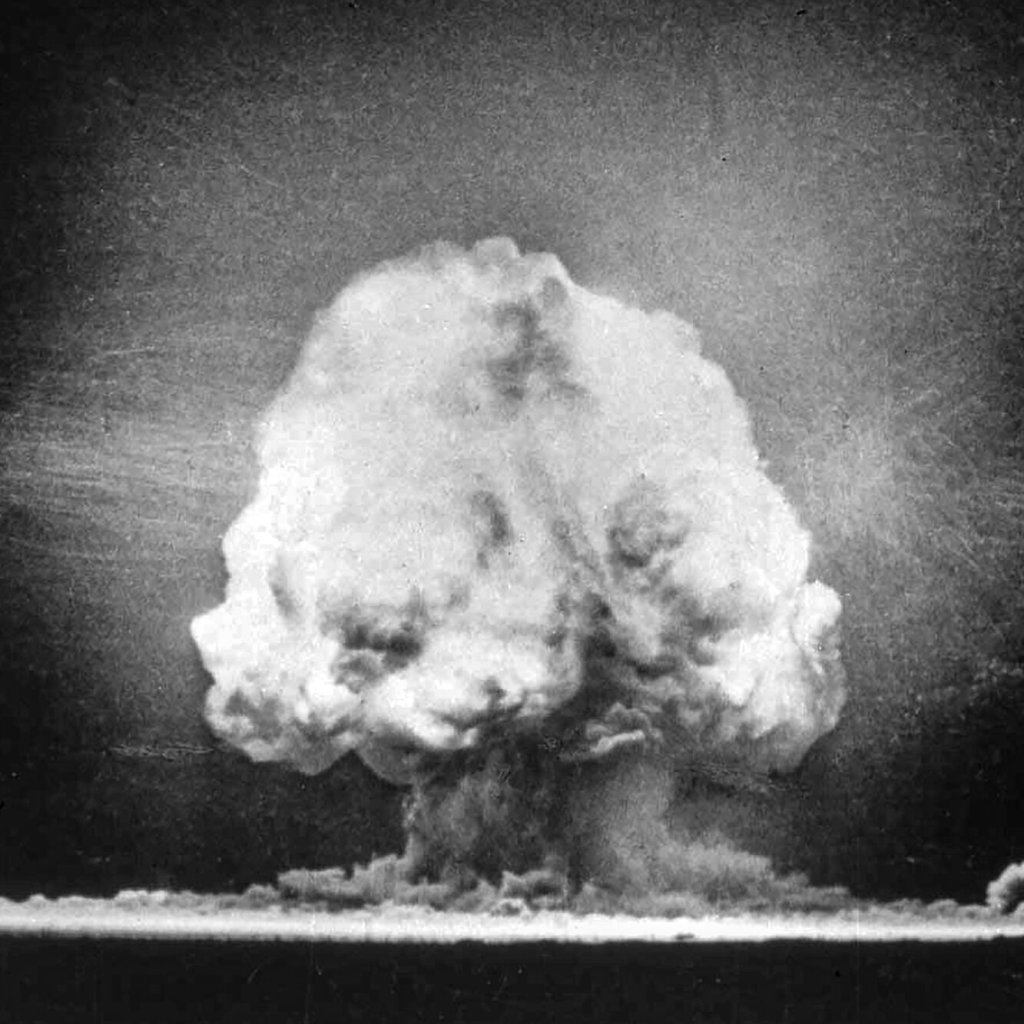
Public opinion holds that the Non-Proliferation Treaty for nuclear weapons is wise and just; that the fewer states possess nuclear weapons, the better – and that perhaps it would be best of all if no state possessed nuclear weapons. And yet for some reason, back in 1942 when these weapons didn’t exist – when, in fact, it was in question whether their development was even physically possible – everyone was in a such great rush to develop them then. Few were asking then whether it might be better to let sleeping nuclei lie (contra Hollywood, retconned moral reluctance for political reasons doesn’t count). What changed?
US supporters sometimes claim that the US only developed nuclear weapons because they were afraid the Nazis were going to develop them first. Historical analysis bears this out for the first part of the war and the initiation of the Manhattan Project, but it is clear that well before the final bombs were produced, US intelligence operations in Europe (specifically Alsos) had concluded that it was impossible that the Nazis had developed – or were indeed anywhere near developing – any such weapons. Yet the US continued their own program, even as the justification for doing loosed its hold on the riverbed and went floating down the stream. The next American argument is that these weapons were necessary to bring an end to World War II without excess American deaths. But such a justification could be used by any country engaged in any war. Why then do the Americans deserve nukes to prevent excess deaths among their soldiers, but not, say, the Congolese?
“Well, everyone can’t very well be allowed to have them. Of course, no one is going to be able to pry the nukes out of the hands of the superpowers, but still, there have to be limits.” But – why? Because when everyone is super, no one is? (And even if every country had nukes, would that really take much status away from the superpowers? There are many more difficult-to-produce weapons that only a few nations have, such as nuclear submarines or aircraft carriers – and these also more truly distinguish “real” superpowers from the rest, since unlike the superpowers, lil dictatorships like the DPRK don’t have them.) What is the real theoretical argument against a nuclear world?
Continue reading “2 – 4 – 6 – 8: Why We Should Proliferate”






 Literal Explanation Required